
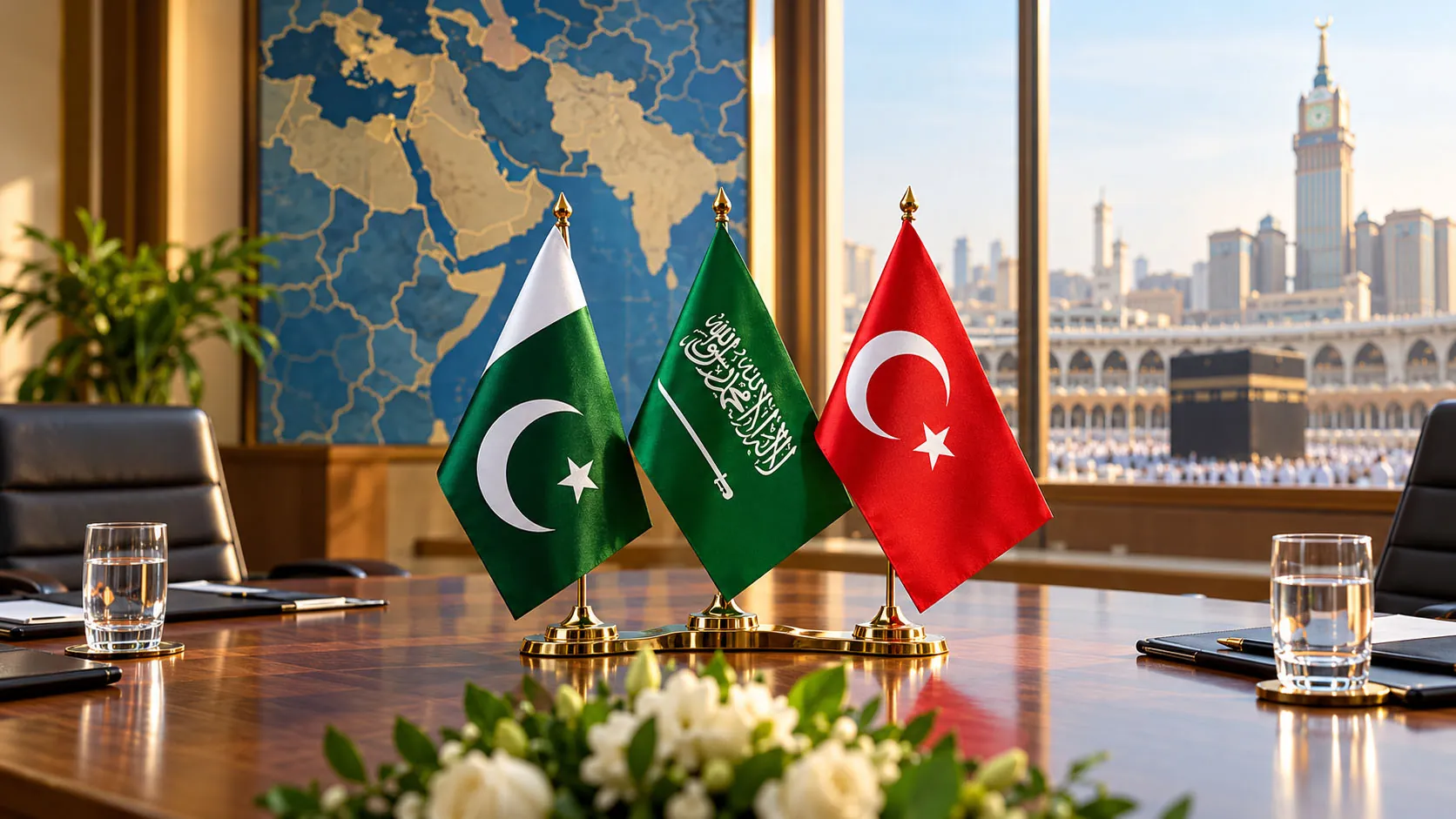
Pakistan’s Role in the Mecca Defence Pact: Balancing Regional Security and Diplomacy
Pakistanhas long maintained important relationships with countries in the Middle East, including Saudi Arabia and Türkiye. These relationships involve diplomacy, trade, energy and defence cooperation. The Mecca Defence Pact has brought new attention to Pakistan’s role in regional security and its relationships with neighbouring and regional countries.
What Is the Mecca Defence Pact?
The Mecca Defence Pact is a trilateral defence agreement involving Pakistan, Saudi Arabia and Türkiye. According to the ORSAM article, the agreement was signed on August 7, 2026, in Mecca, Saudi Arabia. The three countries presented the agreement as a way to strengthen defence cooperation, collective deterrence and the exchange of technology.
The agreement has raised questions about how the three countries will work together on security matters and what their future commitments will involve.
Why Is Pakistan’s Role Important?
Pakistan has security and economic interests in the Middle East. Many Pakistani citizens work in Gulf countries, and money sent home by overseas Pakistanis is an important source of income for many families. Pakistan also depends on the region for a significant part of its energy needs.
Because of these connections, developments in the Middle East can affect Pakistan’s economy and foreign policy. Cooperation with Saudi Arabia and Türkiye may create opportunities for stronger diplomatic and defence relations. At the same time, Pakistan needs to consider how its regional commitments fit with its other national interests.
Balancing Relations with Regional Countries
One challenge for Pakistan is maintaining relations with different countries that may have competing interests. Pakistan has important ties with Saudi Arabia and Türkiye, but its relationship with Iran is also an important part of its regional diplomacy.
Greater defence cooperation can bring benefits, but it may also create difficult decisions if tensions increase between regional countries. Pakistan therefore needs to consider its security priorities, diplomatic relationships and available military resources when making decisions about its role in the pact.
The ORSAM article discusses this challenge through the idea of strategic ambiguity. In simple words, this means that the exact situations in which the agreement might be used are not fully clear. The practical meaning of the pact will depend on how the participating countries interpret and implement their commitments.
What Could Happen Next?
The future impact of the agreement will depend on the decisions made by Pakistan, Saudi Arabia and Türkiye. Their cooperation may develop through further diplomatic discussions, defence planning and technology partnerships.
It is also important to distinguish between the agreement’s stated aims and the actions the countries may take in the future. The pact does not, by itself, tell us exactly how the three countries would respond to every possible regional crisis.
Conclusion
The Mecca Defence Pact is an important development in Pakistan’s regional relationships. It creates opportunities for cooperation with Saudi Arabia and Türkiye, while also raising questions about security commitments and diplomatic balance.
Pakistan’s challenge will be to strengthen these partnerships while protecting its national interests and maintaining constructive relations with other regional countries. The long-term importance of the pact will become clearer as the three countries put their agreement into practice.
Source
Original article: Strategic Ambiguity and Regional Ownership: Defining Pakistan’s Role in the Mecca Defense Pact
Original author: Syed Raza Abbas
Publisher: ORSAM (Center for Middle Eastern Studies)
Publicationdate: August 18, 2026